


Natural product · no varnish · no chemicals
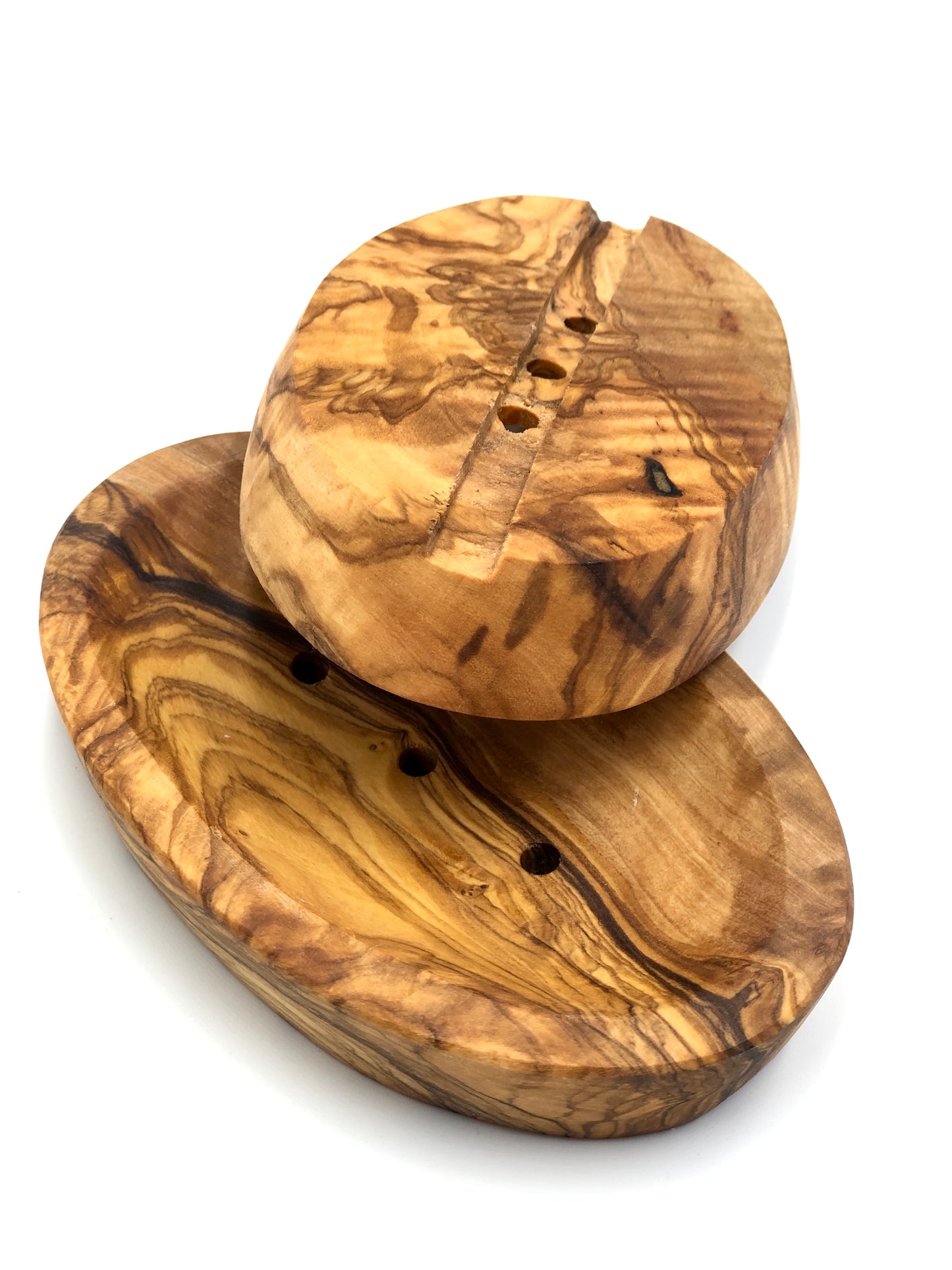
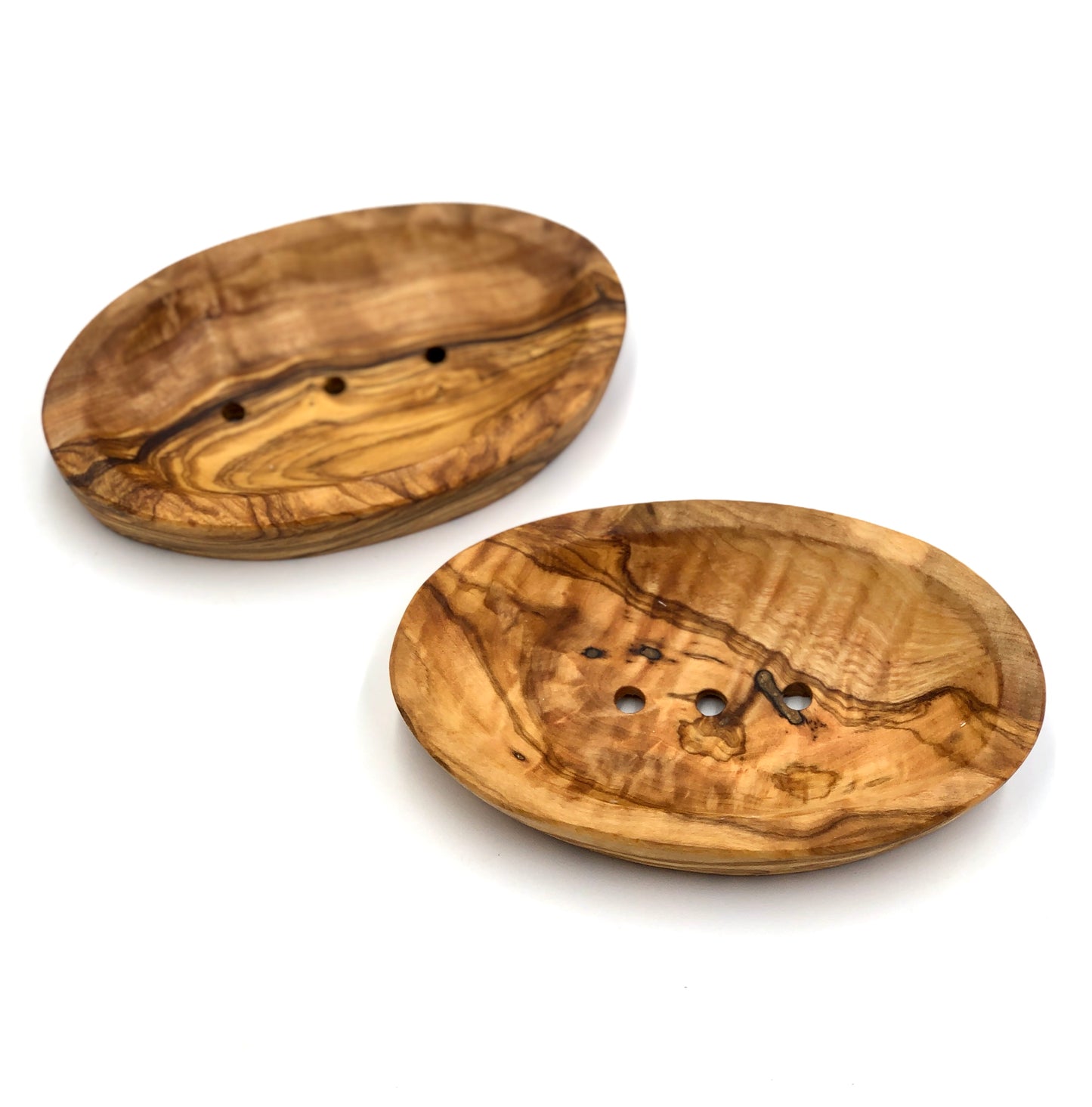
SOAP DISH made of OLIVE WOOD I LARGE with GROOVE
SOAP DISH made of OLIVE WOOD I LARGE with GROOVE
Natural Olive Wood I Mediterranean Origin I Sustainable Cultivation
🌿 Naturally antibacterial 🌿 Water-resistant without chemicals ✅ Each piece is unique ✅ Length approx. 12 cm ✅ With GROOVE ✅ Natural, no varnish
Scope of delivery: 1 soap dish (without soap)
Suitable for our large natural soaps (100g)& mini soaps (26g)
Couldn't load pickup availability
Description
Description
Olive wood soap dish – why this material is so special
Anyone buying a soap dish doesn't want to replace it every few months. A good soap dish should withstand water, not attract germs, look good – and ideally do all this without plastic or chemical coatings. Olive wood meets precisely these requirements, and it does so naturally.
What makes olive wood so special
Olive wood is one of the hardest and densest types of wood available. This extraordinary density is no coincidence: olive trees grow slowly, often over decades or even centuries, which makes their wood particularly strong and durable. The high natural oil content of the wood ensures that water can hardly penetrate it – a characteristic that makes olive wood ideal for use in the bathroom.
Naturally antibacterial: The dense structure combined with the natural oil content creates a surface where germs and bacteria find it difficult to settle. This makes olive wood a hygienic choice – WITHOUT any chemical treatment.
Water-resistant: Unlike many other types of wood, olive wood can withstand prolonged contact with moisture without swelling or molding – provided it is dried after contact with water and oiled occasionally.
No varnish, no chemicals: Our soap dishes are completely natural. The surfaces are only oiled with a little olive oil to protect them from drying out. That's it. No sealants, no synthetic coatings.
Each piece is unique: The grain of olive wood is as individual as a fingerprint. No two dishes look alike – the warm golden tones, the dark veins, the interplay between light and deep wood. This is not a design effect, but the result of the tree's natural growth over many years.
Where does the wood come from?
The olive wood for our soap dishes comes from selected plantations in the Mediterranean region. An important principle here: the wood is only released for processing when the respective olive tree no longer bears fruit. This means that no healthy, fruit-bearing tree is felled. The wood is, in a sense, a byproduct of the tree's natural life cycle.
Careful attention is paid to sustainability and fair trade relations.
How long does an olive wood soap dish last?
With proper care, an olive wood soap dish is an investment for many years, ideally for decades. This is one of the biggest differences compared to plastic or ceramic dishes: olive wood becomes more beautiful with time, not worse – provided it is occasionally given some care in the form of a few drops of oil.
Olive wood soap dish – the perfect complement to natural soap
A handmade natural soap needs the right base to truly last a long time. Soap that lies in standing water between uses dissolves much faster and starts to get mushy. A soap dish with drainage holes – like ours made of olive wood – ensures that excess water can drain away and the soap dries between uses. This significantly extends the life of the soap.
Olive wood is not only functional but also brings a touch of natural warmth to the bathroom. The honey-colored grain suits almost any decor – whether modern, rustic, or minimalist.
Frequently asked questions about olive wood soap dishes
Is olive wood really antibacterial? Yes – the dense structure and natural oil content of the wood naturally inhibit the settlement of germs and bacteria, without chemical additives.
Can I clean the dish with dish soap? Yes, a little dish soap won't harm it. It's important to dry the dish immediately afterward and not leave it in water.
How often do I need to oil it? The olive wood will tell you itself: if the contrasting grain starts to fade, it's time. Usually, 2-3 times a year is sufficient.
Which oil should I use? Any vegetable oil from the kitchen works – olive oil is a natural choice, but rapeseed or sunflower oil are also suitable.
Is every dish really different? Yes. Since olive wood is a natural product, each piece differs slightly in grain, color tones, and shape from the product images. This is not a defect, but the nature of the material.
Is the dish suitable for the dishwasher? No – dishwashers, hot soaking water, and direct heat sources are unsuitable for olive wood and can cause the wood to crack.
! As each piece of olive wood is characterized by its individual grain and the natural growth of the tree, the delivered product will differ slightly in color and pattern from the illustrations – and thus become a unique piece.
Is every bowl really different?
Is every bowl really different?
Yes – and that’s not a marketing promise, but the nature of the material.
Olive wood grows slowly. An olive tree can live for hundreds of years, and each of these years leaves its mark on the wood: in the direction of the fibers, in the distribution of the dark veins, in the transitions between light sapwood and the deeper, darker heartwood. No two trees grow alike – and thus no two bowls are alike.
What this means in practice: The bowl you receive will not look exactly like the one in the product photo. The basic shape is the same, but the grain, colors, and pattern are individual. Sometimes warm honey and golden tones predominate, sometimes stronger contrasts with almost black veins on a light background appear – sometimes the grain flows calmly, sometimes it twists in graceful curves.
This is not a defect. It is proof that you are holding a genuine natural product – and not an industrially uniform piece.
Care instructions
Care instructions
Olive wood is naturally robust and easy to care for. With a few simple steps, your soap dish will last for many years and retain its beautiful, high-contrast grain.
Cleaning
For cleaning, a soft sponge, lukewarm water, and a little dish soap are sufficient. Important: Do not leave the dish to air dry afterwards, but immediately wipe it dry with a kitchen towel. Standing water will damage the wood over time.
Oiling – how to keep the grain beautiful
Olive wood will show you itself when it's time for oiling: as soon as the typical, high-contrast grain starts to fade, the right moment has come. Simply apply a few drops of olive oil or another vegetable oil from the kitchen to the surface and gently rub it in. This protects the wood from drying out and brings out the warm tones again. Depending on usage, oiling 2-3 times a year is recommended.
What to avoid
Dishwashers, hot soaking water, and direct heat sources are the biggest enemies of olive wood. The wood can crack and become unsightly.
No varnishes, no chemicals
Our olive wood soap dishes are natural – no varnishes, no chemical treatments. Only to protect against drying out, the surfaces are lightly oiled with olive oil before delivery.
Manufacturer
Manufacturer
Tirol Seife
Brixentalerstrasse 51
A-6300 Wörgl
hallo@tirolseife.at




Plastic-Free Bathrooms
-

MINI SOAPS
Discover the world of handmade, natural mini-soaps from Tirol Seifen. Pamper your...
-

BABY AND CHILDREN'S SOAPS
Our children's soaps: Especially mild With nourishing coconut milk and cocoa butter...


Natural raw materials. Authentic fragrances.
Handmade for you in our Tyrolean manufactory.
-
Our Philosophy: The Power of Nature in Every Soap
.
Quality is our top priority. Our secret to excellent products: testing, testing, and more testing. Every formula is refined until we are completely satisfied.
-
CONTACT
.
PERSONALIZED
(Hotel soaps, corporate gifts).
Don't miss a thing and follow us on social media channels